

Contents
Mulching (Acchadana), Waaphasa (described here), Jeevamrut, and Beejamrut are the fundamental principles of the Subhash Palekar Zero Budget Natural Farming technique. In this article, let us understand what Acchadana is, along with its importance and benefits.
Compiled by: Smt. Raghavi Konekar, Ponda, Goa (28.12.2021)
1. What is Acchadana (Mulching)?
Mulching is the simple practice of covering the soil’s surface to protect and nourish the land, as it maintains the vitality and fertility of the soil. By acting as a protective layer, mulch creates a thriving micro-environment, that support the specific conditions necessary for soil microorganisms and earthworms to flourish.
This process keeps the soil fertile, well-aerated, and porous, which significantly boosts the population of good bacteria. These microbes play a critical role in converting raw minerals into accessible nutrients for plants (a process we explore in detail in our article on Jeevamrut).
2. Types of Acchadana (Mulching)
There are two types of mulching suitable for home cultivation:
- Kastha Acchadana (straw mulching)
- Sajiva Acchadana (live mulching)
2a. Straw Mulching (Kastha Acchadana)
Straw mulching involves covering the soil around trees or saplings with organic debris such as dry leaves, twigs, coconut husks, grain hulls, sugarcane bagasse, or (kitchen) wet waste. And the best part, these materials are often readily available for free within our homes and surroundings.
Aim for a layer up to 4.5 inches thick for dry materials. However, if you are using wet kitchen waste, ensure the layer does not exceed 1 inch to maintain proper aeration.
To accelerate decomposition, sprinkle the mulch with Jeevamrut (diluted in ten parts water) every week or two. This rapidly converts the organic matter into humus, the dark, crumbly, and nutrient-rich soil that plants love. Because the mulch naturally breaks down over time, it will need to be replenished periodically.
2b. Live Mulching (Sajiva Acchadana)
Live mulching is the practice of growing shorter or low height crops alongside the main crop. This method not only increases yield from a small space but also keeps the soil naturally covered.
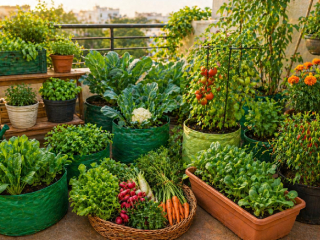
So for example, if a tomato plant is growing in the centre of a pot, you can utilise the surrounding space for leafy greens like fenugreek and coriander, or root vegetables such as radish, carrots, onions, and garlic. This method of intercropping allows you to harvest multiple crops from a small area while ensuring the soil remains shaded and protected. Creeping vines, such as muskmelon, watermelon, pumpkin, ash gourd and sweet potato are also excellent choices for providing natural, living ground mulch.
3. Stockpile mulch before the monsoon
Since straw mulching materials decompose over time, they need to be replenished regularly. If you’re someone relying only on this type of mulching then a large quantity is required. And since it is difficult to collect dry leaves during the monsoons (June to October), it is wise to store as much as possible between November and May.
4. The magic of mulch: Top benefits
- Protection: It shields the soil from harsh sunlight, extreme cold, heavy winds, and the direct impact of raindrops.
- Moisture Retention: By preventing direct contact with sun and wind, soil moisture lasts longer, reducing the need for water.
- Earthworm Activity: It encourages the growth of earthworms. Without mulch, earthworms stay underground during the day for fear of birds; under mulch, they work day and night, keeping the soil porous and eliminating the need for manual tilling.
- Weed Control: Weed seeds do not receive sunlight under the mulch, their sprouts turn yellow and die off, providing natural weed control.
- Nutrient Supply: The constant decomposition of natural elements creates ‘humus,’ making plants strong and healthy.
- Nitrogen Fixation: In live mulching, if the main crop is a monocot (grains), the intercrop should be a dicot (pulses), and vice versa. This ensures a steady nitrogen supply through the roots of dicot crops.
- Creation of Waaphasa: Mulching maintains the perfect level of moisture known as ‘Waaphasa’, a state where the spaces between soil particles contain 50% vapour and 50% air. Only in this state can roots properly absorb oxygen and water.
- Soil Vitality: It prevents humus particles from being blown away by wind or scorched by the sun.
- Drought Resistance: In dry conditions, mulch absorbs moisture from the air, keeping plants green even with minimal water.
5. Mulching: The ultimate green waste solution
The points above highlight that mulching plays a vital role in Subhash Palekar Zero Budget Natural Farming technique. Materials that many consider ‘rubbish’ like dry leaves, coconut husks, and kitchen waste are actually a great boon for natural farming. Currently, Solid Waste Management is a major challenge for governments in cities and villages. By using these free natural materials for mulching, we contribute to environmental protection. In return, nature rewards us with an abundance of toxin-free, nutritious vegetables and fruits.
(Article compiled from series based on the Subhash Palekar Natural Farming technique)
 How to cultivate vital medicinal plants at home ? Part – 2
 How to cultivate vital medicinal plants at home ? Part – 1
 Firefighting training essentials: Civic readiness for an uncertain future
 A seasonal guide to traditional home gardening
 Natural farming: The sustainable alternative (Part 4)
 Natural farming: The sustainable alternative (Part 3)